
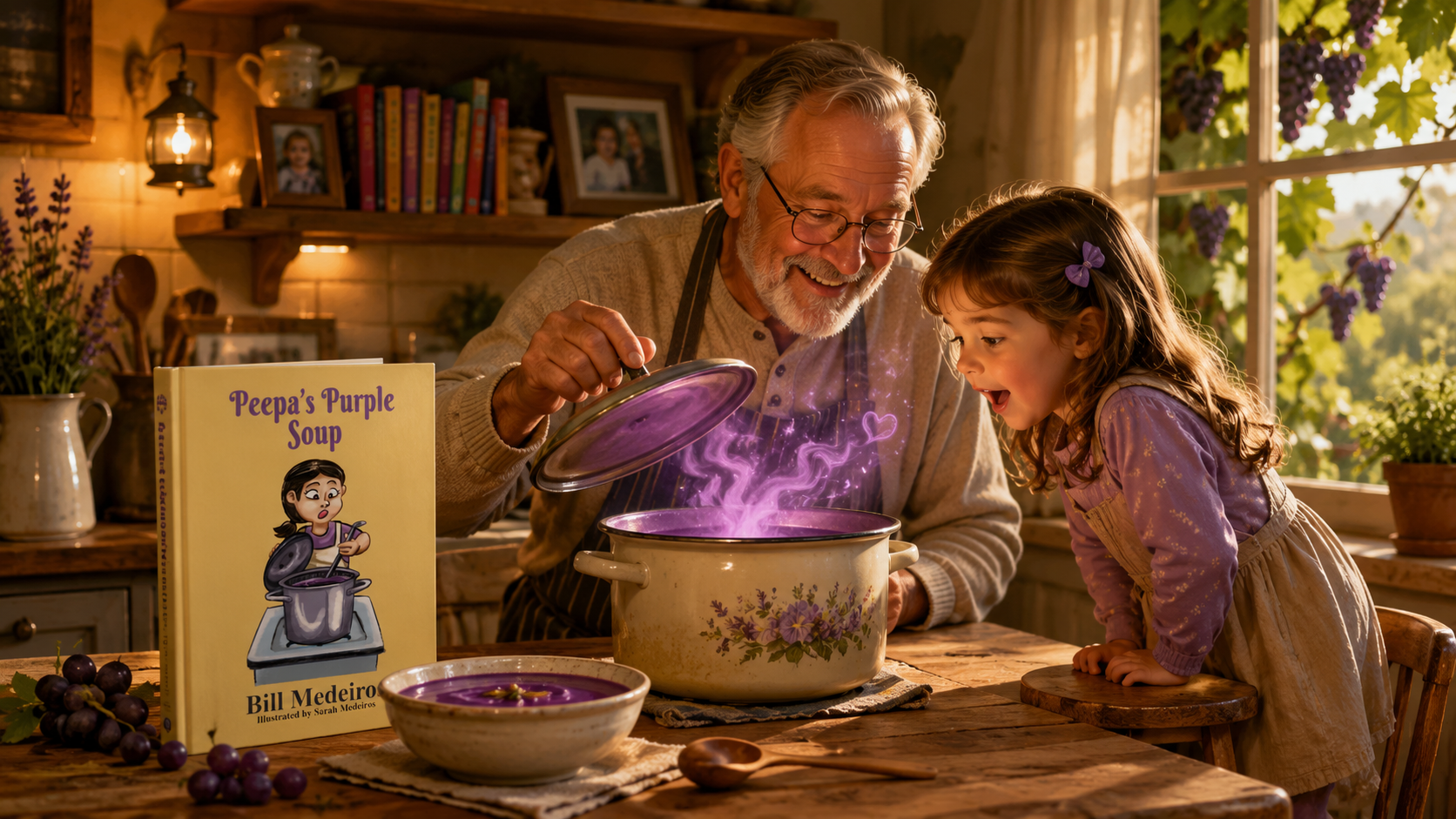
Stories or the idea of the story are born in solitude or during a walk or sometimes while relaxing on a beach, but “The Great Stories” are born over a warm cup of cocoa by Grandpa that is filled to the top with marshmallows, or over a delicious bowl of soup. Every kid loves to hear stories from their grandparents, and this children’s story book tells the tale of the pot of purple soup.
Peepa’s Purple Soup: A Children’s Story Book Worth Reading Twice
Bill Medeiros isn’t a career novelist. He never was. Instead, he’s a lifelong Massachusetts resident who stumbled into storytelling later in life, mostly thanks to his grandkids. Because of that, one detail explains almost everything about how he writes.
He didn’t take a class, nor did he chase an MFA. Instead, he just told stories. At the dinner table. In the backyard. To grandkids who always wanted one more before bed. Eventually, those small moments turned into something bigger.
Funny how that works, isn’t it? After all, you don’t usually plan the meaningful stuff. Instead, it just sneaks up on you.
His Grandkids Were His Mentors
He never had a writing coach, and honestly, he didn’t need one. Instead, his grandchildren taught him what a good story actually needs: warmth, a little humor, and a bit of mystery. Meanwhile, his own upbringing gave him the values he wanted to hand down.
So instead of making stuff up from thin air, he pulled from real memories. That’s probably why the stories feel true. Because, well, they are.
His daughter Sarah illustrates the books, too. So this isn’t a solo project at all. Instead, it’s a family one, start to finish, and that shows on every single page.
That Soup Wasn’t Just Soup
The purple soup wasn’t a plot device dreamed up for effect. In fact, it actually happened. So Bill just wrote it down, added a bit of wonder, and let it become a book.
Simple as that.
An Illustrated Book About a Grandparent Bond Kids Won’t Forget
This is Peepa’s Purple Soup, and it’s still his most loved title.
What Happens in the Story
Olivia wants to know one thing: why is Grandpa’s soup purple? So, naturally, she investigates. Along the way, she picks up lessons about patience, gratitude, and where blessings actually come from.
At its core, it’s an illustrated book about a grandparent bond, plain and simple. Olivia’s grandfather isn’t stiff or distant. Instead, he’s playful and patient, the type who lets a mystery breathe rather than spoiling it.
Because of that, kids love Olivia’s curiosity. Meanwhile, parents tend to notice the quieter stuff underneath.
Curiosity Does the Heavy Lifting
Here’s the thing Bill gets right: kids learn better through wonder than lectures. So nobody hands Olivia a speech about gratitude. Instead, she figures it out herself, through a grapevine, a question, and a grandfather who lets her explore.
That’s what makes this a story book about curiosity and grandpa instead of just another moral tale. The lesson sneaks in sideways, so it never feels forced. After all, nobody likes being told how to feel. Not even kids.
Tradition Hides in the Small Stuff
Underneath it all, this is also a children’s book about family traditions. The soup isn’t just a snack anymore. Instead, it’s a ritual, passed down the same way Bill’s own memories got passed down to him.
So really, two things happen at once. First, there’s a fun mystery for the kids. Second, there’s a quiet nod to tradition for everyone else.
Why It Works So Well for Reading Time
Beyond the message, this book simply works as a read-aloud, and honestly, that matters more than people give it credit for.
Gentle on Little Ears
The sentences stay short. The pacing stays easy. Plus, Sarah’s illustrations give kids something to look at while they listen, which keeps them from wandering off mid-page.
So yes, it’s a children’s book perfect for story time. Whether it’s bedtime or a lazy Sunday with grandparents, it fits either way.
Solid for Reading Solo, Too
It also holds up when a kid reads it alone. The words stay simple, and the sentences don’t drag on. Meanwhile, the plot moves at a steady pace, so nobody gets lost halfway through.
Basically, it’s a children’s book great for early readers, not just something read to them. Plus, parents who’ve visited Mr. Bill’s Bookshelf mention this a lot: their kids ask for it again, and then again. That’s saying something for a first book.
Why Families Keep Coming Back to This One
Here’s a small detail worth mentioning. Every time a child reopens this book, they seem to notice something new, maybe a tiny illustration tucked in the background, or a line they skipped the first time around. So instead of getting shelved after one read, it tends to stick around.
That’s partly because the story rewards patience, much like Olivia herself does in the book. Also, since the lesson never feels forced, kids don’t get tired of hearing it repeated. Instead, they pick up something slightly different each time, which is exactly why so many families treat it less like a one-time read and more like a small tradition of its own.
It Holds Up on a Second Read
So, kids notice new things each time through. That’s rare for a picture book. It’s probably why families keep this one on the shelf instead of passing it along.
Conclusion
That pot of purple soup could’ve just been dinner. Instead, it turned into a children’s story book families still bring up years later. Bill didn’t write it to impress anyone. Rather, he wrote it so his grandkids, and now yours, could feel the same curiosity he felt growing up. That’s really the whole point behind Mr. Bill’s Bookshelf. Small stories that stick around.
FAQ
Is this really a children’s story book, or is it for grown-ups too?
It’s written for kids, sure. But honestly, the themes about family and gratitude land just as well with the adults reading along.
What age group fits best?
Early readers do great with it. Also, it works well for story time with younger kids who are just listening in.
Is there any religious tone?
Yes, a gentle one. It touches on gratitude and blessings, but it never gets preachy about it.
Are there other books to check out?
Yep. Bill’s released more titles since then, and they still stick to that same grandparent-grandchild storytelling style.